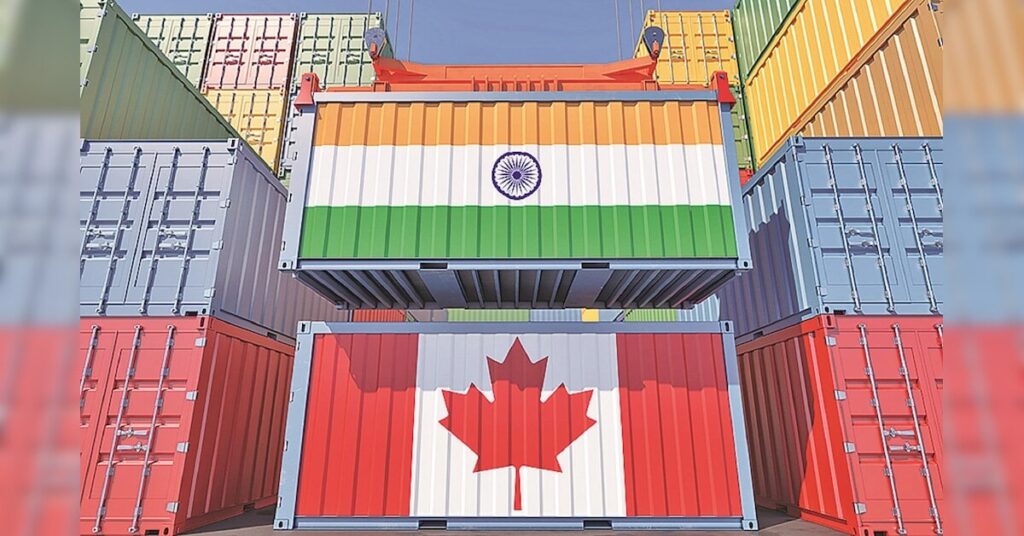
The development could give India additional leverage in the Cepa negotiations, particularly as Canada seeks to open new markets while facing a sharp deterioration in its trade relationship with its largest trading partner.
“The US introduced at the last hour… efforts to restrict our ability to have other trade deals. Unacceptable. Canadian businesses now enjoy tariff-free access to 1 and a half billion consumers. Over the next six months, we’ll double that number through new trade deals from Asean to India,” Carney said on Saturday while addressing the media.
Economist and former Niti Aayog member Arvind Virmani posted on X: “We need to accelerate signing and implementation of an India-Canada Cepa. We don’t have any time to waste!”
After talks collapsed on Saturday, the US imposed 50 per cent tariff on $20 billion Canadian goods and Ottawa has vowed
it would impose “dollar-for-dollar” retaliatory tariffs from September 8.
Ajay Srivastava, founder, Global Trade Research Initiative, said Canada’s experience is a warning for India, which is also negotiating a trade deal with Washington.
“New Delhi should seek clear, binding and durable tariff concessions before making commitments on agriculture, digital regulation, critical minerals or government procurement,” said Srivastava.
“An agreement that merely reduces some US tariffs while leaving Washington free to impose fresh duties under Sections 232, 301 or other domestic laws would offer little certainty. India should protect its regulatory and strategic autonomy and concede only where the benefits are balanced, enforceable and protected against future unilateral tariff action,” he added.
After a tumultuous relationship for over two years, India and Canada relaunched negotiations for a Comprehensive Economic Partnership Agreement (Cepa) in March this year with an aim to increase the two-way trade to $50 billion by 2030 from $8 billion at present.
Key exports from India to Canada include drugs and pharmaceuticals, iron and steel, seafood, cotton garments, electronic goods and chemicals among others.
Major imports of India from Canada are pulses, pearls and semiprecious stones, coal, fertilizer, paper and petroleum crude. Canada represents a market of 41.65 million people (2025) and US $2.34 trillion in terms of GDP at purchasing price parity (PPP).
Key sectors of India’s services exports to Canada include telecommunications, computer and information services, and other business services.
Canada is also home to over 425,000 Indian students and a strong Indian community. The Canadian negotiating mandate gives a clear picture of the breadth of the proposed agreement.
For goods, Canada wants the elimination or reduction of tariffs and non-tariff barriers and commercially meaningful access for its exporters. It also wants simple, transparent rules of origin and improved customs and trade-facilitation procedures. In agriculture, Canada wants improved market access but has excluded its own supply-managed dairy, poultry and egg sectors from additional concessions.
For services, it is seeking comprehensive commitments covering market access, domestic regulation and professional services. It also wants predictable rules facilitating the temporary entry of business people and professionals, while maintaining labour-market safeguards.
In financial services, Canada wants market-access and regulatory commitments but also seeks to preserve its existing regulatory framework. For government procurement, it wants procedural rules based on international standards, with procurement that is fair, open and transparent.