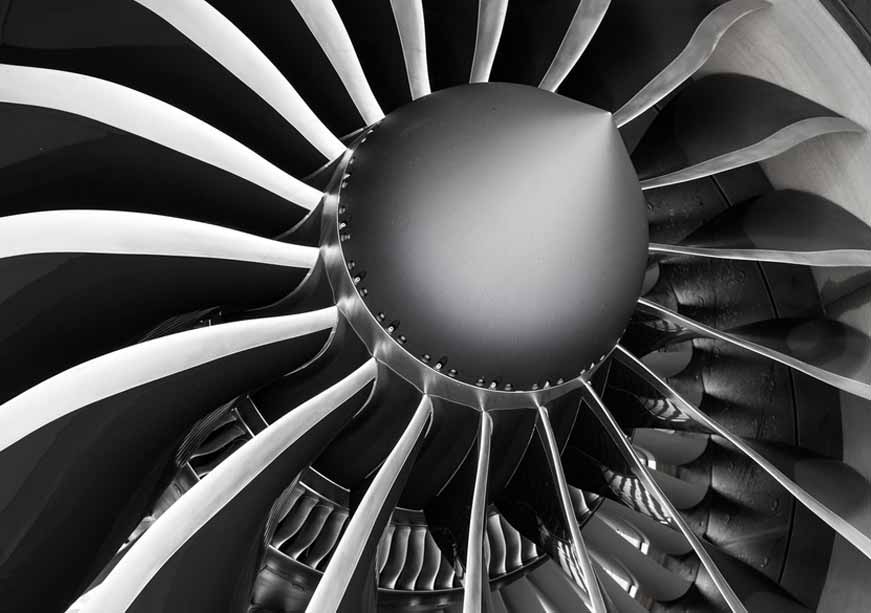

Over the last year, a grave limitation of India’s fighter jet programme has come to the fore: the lack of jet engines. Dozens of finished Tejas Mk1A aircraft have been languishing on HAL production lines in Nashik and Bengaluru, waiting for the promised engines from US aerospace major General Electric. This engine shortfall was something policymakers could track with precision, as it involved a single supplier, one missing component, and a known delivery date.
Despite the tripling of orders for fighter jets, the growing number of submarines being built, and the development of a fifth-generation fighter, Kerala Minerals and Metals Limited (KMML) — the country’s sole domestic producer of titanium sponge — has been producing the same amount of titanium every year since 2011. The result is a structural mismatch: while India is implementing an ambitious defence modernisation programme, it is also saddled with a crippled titanium supply chain that was never designed to support its surging demand. If left unaddressed, this gap will be detrimental to India’s most important defence procurement programmes, at a time when the country can least afford any delays.
However, India has an opportunity to act now, rather than later, once this shortage materialises.
The Chokepoint Chain
India holds the world’s third-largest ilmenite reserves and second-largest rutile reserves. It has beach sand deposits along the coasts of Keralam, Tamil Nadu, Andhra Pradesh, and Odisha, which have the potential to produce an extremely high volume of titanium ore domestically. But the constraint appears at the very next stage of the value chain: converting that ore into titanium sponge. Since the plant was commissioned in 2011, KMML in Kollam has been producing titanium sponge at 500 tonnes per year, a ceiling that hasn’t budged despite increasing demand from India’s fighter and submarine programmes.
Since the plant was commissioned in 2011, KMML in Kollam has been producing titanium sponge at 500 tonnes per year, a ceiling that hasn’t budged despite increasing demand from India’s fighter and submarine programmes.
Two further constraints sit downstream of the sponge plant. Even after aerospace-grade titanium capacity is built, it takes years for it to become defence-grade titanium, because it must first pass through a long qualification process. Every tonne of titanium sponge produced by KMML goes through a single downstream firm before reaching the factory floor, as Mishra Dhatu Nigam (MIDHANI) in Hyderabad is India’s sole producer of titanium alloys. There is no domestic back-up for any disruption, shutdown, delay, or quality failure at either site. Despite holding some of the world’s largest titanium-bearing mineral reserves, India has relied on imports of aerospace-grade titanium sponge from countries including Russia, Japan, and China, with MIDHANI itself pursuing direct cooperation with Russia’s VSMPO-AVISMA, the world’s largest titanium producer, to help close that gap. None of these four links represents a vulnerability on its own. However, together, they form a chain of single points of failure, and it is that chain, not any one weak link, that India’s fighter and submarine programmes quietly depend on.
The Cost to India’s Fighter and Submarine Programmes
The most obvious exposure is with the Tejas Mk1A programme. In July 2026, HAL’s chairman confirmed that the company has already reached a production rate of 24 aircraft a year and is on track for 30 aircraft a year by 2027-28, to meet an order book of 180 aircraft. Sustaining that pace requires a continuous, reliable supply of alloys — something a capped, single-vendor chain cannot guarantee. The risk here won’t announce itself as a headline deficit. It will look like the engine delays that already slowed this programme, only from a different link in the chain: slower deliveries and rising costs.
The Advanced Medium Combat Aircraft (AMCA) project raises the stakes further, because its timeline leaves far less room for error. Series production is scheduled to begin in 2035, but the capacity to supply it has to exist or materialise years earlier, since qualifying new titanium alloys for defence use takes several years on its own. If that expansion does not begin now, it will not be ready in time, no matter how well the aircraft itself is developed.
The result is that three defence programmes, on three different timelines, are quietly drawing from the same single plant and the same single alloy producer. None of them is likely to collapse outright. What is more likely is a slow, compounding delay spreading across all three at once — harder to trace to a single cause than an engine shortage, and harder to fix once it starts.
Submarine construction adds to the same pressure, not a separate one: naval propulsion and pressure-critical components draw on the same limited domestic alloy chain that Tejas and AMCA depend on. The result is that three defence programmes, on three different timelines, are quietly drawing from the same single plant and the same single alloy producer. None of them is likely to collapse outright. What is more likely is a slow, compounding delay spreading across all three at once — harder to trace to a single cause than an engine shortage, and harder to fix once it starts.
Closing the Titanium Gap
There are three concrete steps India must take to prevent this gap from becoming a crisis. The first is to fast-track the joint venture between KMML and the Steel Authority of India Limited (SAIL). Although KMML has already agreed to collaborate with SAIL to increase titanium sponge production, it remains a proposal, not a working plant. Its timeline should be linked publicly to the delivery schedules of the Tejas Mk1A and the AMCA, and treated accordingly — not as a routine industrial project that can be delayed without consequence.
The second step is to diversify supply beyond MIDHANI. At present there is no back-up in the chain: MIDHANI is the sole domestic alloy producer, and qualifying even a smaller second source would close that gap. The third step is procedural rather than industrial: build mineral and alloy sourcing disclosure into future Defence Acquisition Procedure (DAP) contracts, so that new orders come with a documented supply chain rather than an assumed one. The United States already does this for its defence contracts, under a specialty metals clause in effect since 1973 that mandates domestic or allied sourcing of titanium and other critical metals. India has no equivalent requirement today.
What India needs now is the same fix it eventually applied to the Tejas engine problem: a named owner, a public timeline, and a supply chain that is monitored, not assumed.
Conclusion
India’s titanium challenge is not one of scarce resources — it is one of capacity planning that has failed to keep pace with defence procurement. The country holds adequate ore and has had working sponge technology since 2011, yet policy attention has not matched programme ambition. The window to fix this is set by AMCA’s 2035 production start, since qualification and capacity expansion together take years to complete. A decision taken within the current defence budget cycle would still arrive in time. What India needs now is the same fix it eventually applied to the Tejas engine problem: a named owner, a public timeline, and a supply chain that is monitored, not assumed.
Sameer Patil is the Director of the Centre for Security, Strategy, and Technology at the Observer Research Foundation.
Veer Puri is a Research Assistant with the Centre for New Economic Diplomacy at the Observer Research Foundation.
The views expressed above belong to the author(s). ORF research and analyses now available on Telegram! Click here to access our curated content — blogs, longforms and interviews.