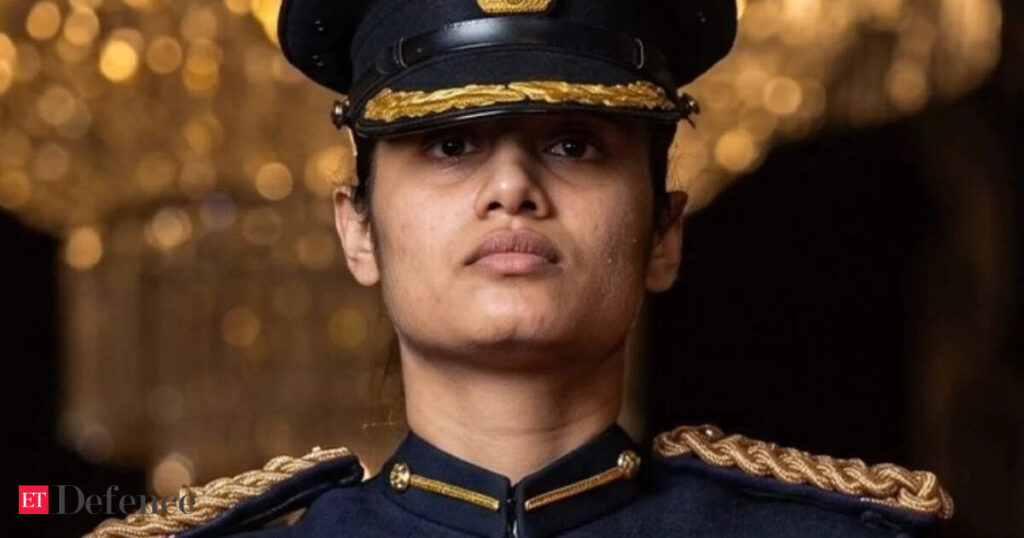
The President is traditionally assisted by five ADCs at a time—three from the Army and one each from the Navy and Air Force. For decades, these prestigious positions were held almost exclusively by men. Solanki was formally presented with the ceremonial aiguillette on May 9, 2025, marking the beginning of her tenure, which is expected to last around two and a half to three years.
Interestingly, Solanki has said in interviews that becoming the President’s ADC was never something she had specifically dreamed of or planned for, largely because the opportunity had once seemed beyond reach. Her selection followed a rigorous process that included an interaction with President Droupadi Murmu, security clearances and an orientation period before she officially assumed her responsibilities.
From District-Level Sports to the Indian Navy
Solanki hails from Haryana and developed a strong interest in sports during her early years. She competed at the district level in badminton and volleyball, experiences that helped develop the discipline, focus and competitive spirit that later became important in her military career.
She joined the Indian Navy in 2012 through the Short Service Commission and entered the Logistics Branch. Over the years, she served in various roles before becoming a technical officer in the Naval Armament Division in Hyderabad.

Officers selected for the President’s ADC position generally have several years of strong service experience. Solanki’s background in logistics and technical assignments gave her extensive operational exposure within the Navy before she took on the historic role at Rashtrapati Bhavan.
What Does a President’s ADC Do?
As the President’s ADC, Solanki is responsible for coordinating and supporting the President’s official engagements. Her duties include staying informed about visiting dignitaries and upcoming events and accompanying the President during state functions, investiture ceremonies and diplomatic meetings.She has spoken about the level of preparation the position requires, explaining that ADCs need to remain updated about everyone meeting the President before each engagement because the President may ask about any of them at short notice.
Her appointment also reflects the gradual expansion of opportunities for women across the Indian Armed Forces, including developments in areas such as command roles and cross-service responsibilities.
Solanki’s historic appointment was followed by another milestone in July 2026, when Major Navya Shekhawat of the Army Service Corps became the second woman officer overall and the first woman from the Indian Army to be appointed ADC to the President.
A Milestone for Women in the Armed Forces
Solanki’s journey from a district-level sportsperson in Haryana to serving alongside the President of India at Rashtrapati Bhavan represents a significant career milestone.
Her appointment also forms part of the broader evolution of opportunities available to women in India’s armed forces. For young women considering a career in defence, her journey demonstrates how sustained service, professional experience and discipline can open doors to roles that were once rarely accessible to women.
From her early sporting years to her service in the Indian Navy and eventual appointment as the President’s ADC, Solanki’s career marks an important chapter in the changing landscape of India’s armed forces.