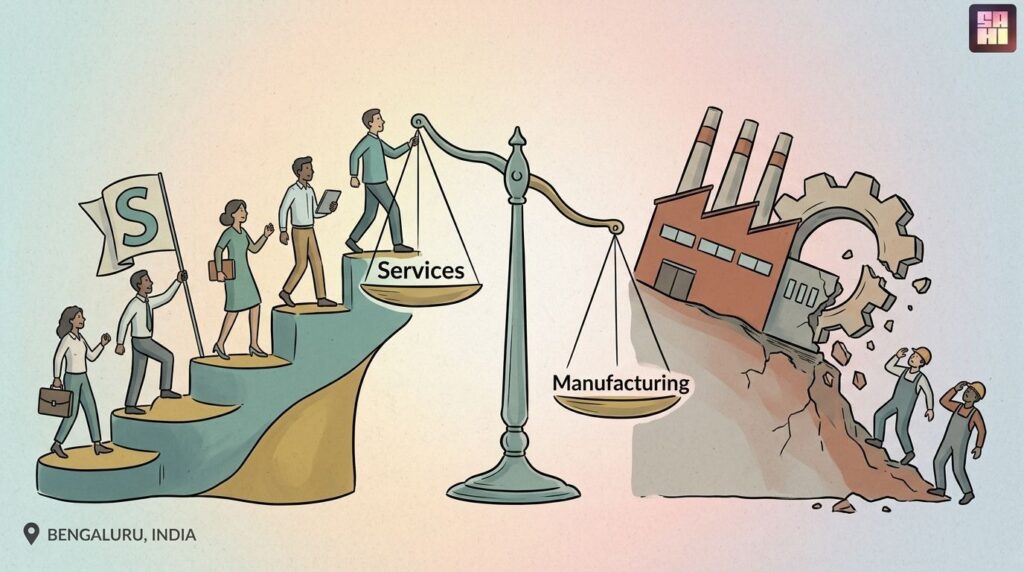
Market snapshot: India’s private sector economic activity showed divergent trends in August 2026, as a rebound in services growth offset a continued slowdown in manufacturing activity. According to the flash PMI data, the Services PMI rose to 54.5 from 53.3 in the previous month, while the Manufacturing PMI slipped to its lowest level since August 2021 at 52.9.
Data Snapshot
- HSBC Flash India Services PMI registered at 54.5 in August 2026 compared to 53.3 in July 2026.
- HSBC Flash India Manufacturing PMI declined to 52.9 in August 2026 from 53.5 in July 2026.
- HSBC Flash India Composite PMI edged higher to 54.6 in August 2026 from 54.3 in July 2026.
What’s Changed
- Services PMI improved by 1.2 points to 54.5 in August from July’s 53.3 (derived: 54.5 vs 53.3).
- Manufacturing PMI fell by 0.6 points to 52.9 in August from July’s 53.5 (derived: 52.9 vs 53.5).
- Composite Flash PMI rose slightly by 0.3 points to 54.6 from July’s 54.3 (derived: 54.6 vs 54.3).
Key Takeaways
- Services Sector Rebound: A revival in services business activity led the expansion, rebounding from a 53-month low of 53.3 in July.
- Manufacturing Slowdown: Factory activity weakened further to 52.9, its lowest since August 2021, with output and new orders growing at their slowest pace in five years.
- Employment Divergence: Manufacturing employment fell for the first time in two and a half years, while service sector hiring surged to a 15-month high.
- Pricing Actions: Despite input cost pressures easing to a seven-month low, companies increased their selling prices at the fastest pace since April 2026 to pass on past expenses.
SAHI Perspective
The August Flash PMI results depict a bifurcated Indian economy. On one hand, the dominant services sector is demonstrating resilience, bouncing back from a multi-year low and supporting overall job creation. On the other hand, the manufacturing engine is cooling rapidly, with key indicators like goods output and new orders growing at their weakest pace in five years, alongside the first manufacturing job cuts in 30 months. This divergence indicates that domestic demand is stabilizing in services but softening in goods, which may prompt a cautious approach from monetary policymakers who are monitoring both growth momentum and persistent price hikes.
Market Implications
The mixed PMI data suggests a neutral-to-soft near-term impact on equity markets. The manufacturing slowdown could weigh on industrial, materials, and auto sector stocks, while the services rebound provides a cushion for banking, financial services, and IT companies. Additionally, the rise in selling prices despite lower input costs shows resilient corporate pricing power but may raise inflation concerns for the RBI. In the debt market, the combination of cooling manufacturing and rising selling prices could keep bond yields range-bound as market participants assess monetary policy moves.
Trading Signals
Market Bias: Neutral
The services sector expansion is offset by a multi-year low in manufacturing PMI. Services PMI rose to 54.5, but Manufacturing PMI declined to 52.9, leaving the overall private sector outlook mixed.
Overweight: Services, Finance, Insurance, IT
Underweight: Industrial Manufacturing, Metals, Capital Goods
Trigger Factors:
- Final PMI prints for August 2026 (usually released in early September).
- RBI policy minutes or upcoming MPC announcements.
- Export demand trends in the next 1-2 months.
Time Horizon: Near-term (0-3 months)
Industry Context
The Indian private sector has been operating under challenging conditions, including intense competition, changing market dynamics, and a slowdown in total sales growth over the previous months. While the services sector had previously hit a 53-month low of 53.3 in July 2026, its recovery to 54.5 in August shows a welcome stabilization. Conversely, manufacturing continues to feel the drag of slower domestic demand and rising selling charges, which might complicate the inflation-growth balance for the broader economy.
Key Risks to Watch
- Manufacturing Job Cutbacks: The first contraction in manufacturing jobs in two and a half years could signal deeper operational distress if sustained.
- Persistent Output Inflation: Companies raising selling prices at the fastest rate since April 2026 despite easing input costs could fuel retail inflation.
- Softening Export Growth: Slower growth in international orders for both goods and services could limit the overall expansion rate in the coming quarters.
Recent Developments
In July 2026, India’s services sector growth fell to a 53-month low with the Services PMI dropping to 53.3 from 57.4 in June, while the Manufacturing PMI eased to 53.5 from 54.2 in June, indicating a broad cooling across both private sectors before the mixed recovery in August.
Closing Insight
While the private sector managed to avoid a deeper slowdown in August thanks to a resilient services sector, the continuing slide in manufacturing and the loss of factory jobs indicate that the underlying momentum remains fragile. Investors and policymakers should watch if the pricing power of firms persists or if demand headwinds force further concessions.
High Performance Trading with SAHI.