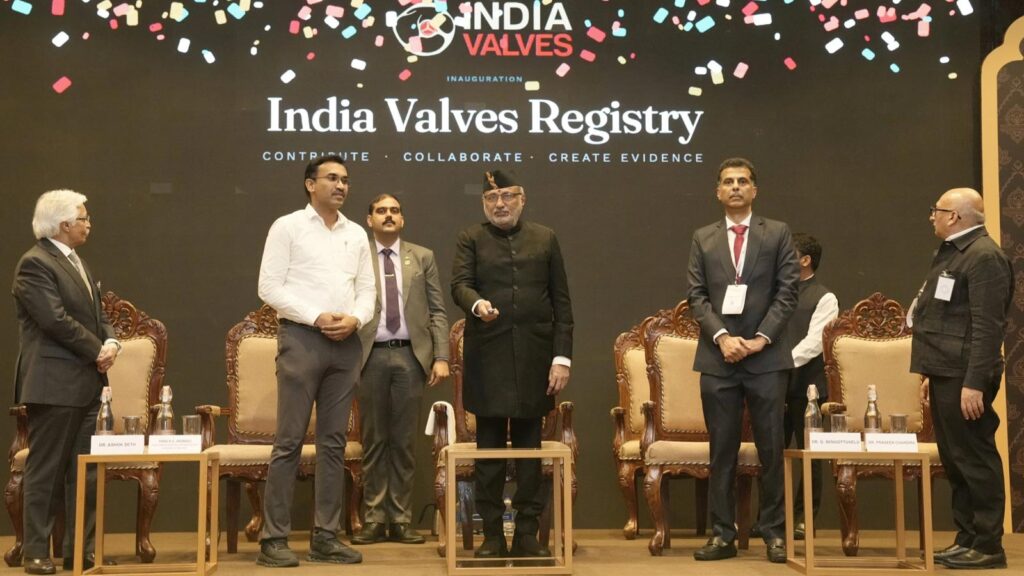
Vice-President C. P. Radhakrishnan on Saturday launched the India Valve Registry, a collaborative multicentre initiative aimed at generating India-specific clinical evidence on heart valve interventions and improving patient care.
The registry was launched at India Valves 2026, a national academic meeting on valvular and structural heart diseases that brought together cardiologists, cardiac surgeons, researchers and healthcare professionals from India and abroad.
Addressing the gathering, V-P Radhakrishnan said systematically recording patient data, treatments and outcomes could help transform individual clinical experiences into collective medical knowledge and strengthen evidence-based cardiac care in the country.
He stressed the need for India to generate its own clinical evidence rather than relying predominantly on data generated in other countries. Such data, he said, would help doctors understand treatment outcomes in Indian patients, identify gaps and challenges, and continuously improve clinical practices.
“Healthcare is a human right” and the benefits of medical advancements should be inclusive and accessible to all, the Vice-President said, underlining the importance of ensuring that progress in medical science translates into better health outcomes across society.
The India Valve Registry will facilitate the systematic, secure and de-identified collection of real-world data on transcatheter valve interventions across multiple centres in India. The initiative is expected to support collaborative research and provide a stronger evidence base for the treatment of valvular and structural heart diseases.
V-P Radhakrishnan highlighted India’s growing capabilities in healthcare, medical technology and scientific research. Referring to India’s response during the COVID-19 pandemic, he said the country demonstrated its capacity to develop vaccines and supply them to around 100 countries.
“Our doctors, scientists and healthcare professionals have earned respect across the world. India has demonstrated remarkable capabilities in advanced medical treatment,” he said.
The Vice-President said India’s ambition to become a Viksit Bharat by 2047 must be accompanied by the creation of a Swasth Bharat, where scientific progress and innovation ultimately improve the quality of people’s lives.
He also called for greater collaboration among clinicians, researchers, scientists and healthcare institutions to build a healthcare ecosystem in which technological and medical advancements remain focused on patient welfare.
India Valves 2026 serves as a platform for scientific exchange, training and collaborative research in the field of valvular and structural heart disease.
The event was attended by Tamil Nadu Health, Medical Education and Family Welfare Minister K. G. Arunraj, along with senior cardiologists including Dr G. Sengottuvelu, Dr Ashok Seth and Dr Praveen Chandra, besides cardiac surgeons, researchers and other medical professionals.