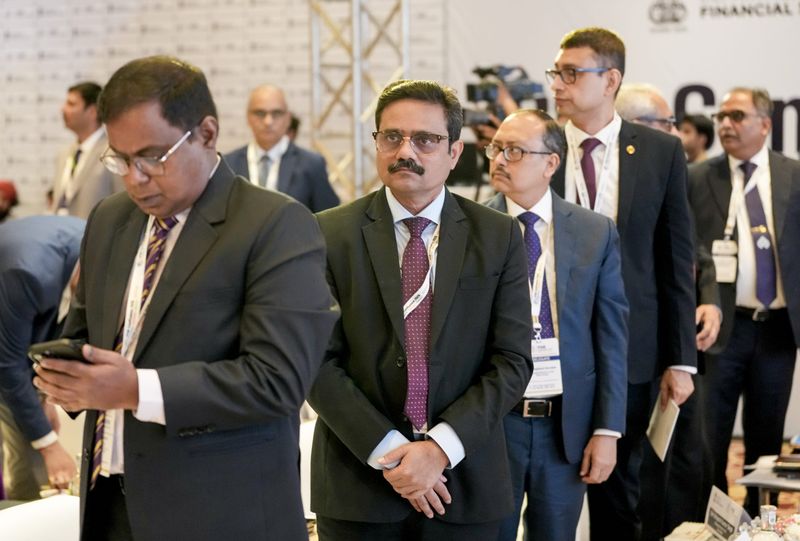
Publish borrower-wise information on major write-offs, settlements, recoveries and haircuts, said the union, and fix accountability from wilful defaulters and governance failures.
New Delhi: Public sector banks cannot be asked to drive India’s growth while questions over their governance, staffing and public purpose remain unresolved, the United Forum of Bank Unions (UFBU) has said in a press statement on Thursday (August 20).
Responding to the Union government’s two-day PSB Confluence 2026, which ended earlier this week, UFBU said discussions around competitiveness, youth outreach, digital platforms and priority-sector lending must be accompanied by reforms to strengthen public sector bank boards.
A central concern raised by the union is the continued vacancy of employee representatives and other positions on bank boards. UFBU said that for more than a decade, posts for workmen and officer employee representatives have remained unfilled. “Truncated boards inevitably risk becoming management-driven or government-driven boards,” it said.
The union said that employees, depositors, farmers, MSMEs and other stakeholders must have a meaningful voice in banking oversight.
The union body also cautioned against treating headline profits as the sole measure of banking health. It called for transparent disclosures that differentiate sustainable income earned from core banking operations from exceptional gains, including reversals of provisions. Reversals of provisions occur when banks set aside funds for loans they expect to go bad, but which are later partially or wholly repaid. These are not profits from direct banking activities.
UFBU has also said that public sector banks should lend directly to borrowers rather than making them rely on microfinance institutions, non-banking financial institutions, fintech companies and other intermediaries.
Technology, it said, should “deepen public banking and reduce costs for citizens”, and now weaken the direct relationship between banks and customers. Nor should it “become a route to privatise customer
relationships or socialise risk while private entities appropriate the returns”.
The statement also criticised the growing use of service charges and penalties on ordinary depositors and small customers. “A public bank cannot preach inclusion while pricing vulnerable customers for basic banking services,” it said. UFBU has opposed outsourcing and contractualisation of banking staff, pointing out that permanent and perennial work should be carried out by adequately recruited and trained bank employees.
The downside of contractualisation and poor salaries and payments to employees, it pointed out, was “operational, data-security and accountability related risks”.
On bad loans, UFBU pointed to the banking crisis of 2017–21 and earlier accumulation of large corporate non-performing assets. It called for greater transparency over large defaults, recoveries, haircuts and accountability for sanctioning and monitoring failures, as well as action against wilful defaulters. “The burden of corporate failure cannot repeatedly be transferred to workers, depositors and citizens,” it said.
The statement also urged public banks to prioritise productive lending to manufacturing, agriculture, MSMEs, cooperatives and infrastructure rather than relying increasingly on unsecured personal loans and gold-backed lending.
Its sharpest criticism concerned what it described as a “reverse subsidy”: ordinary savers receive relatively low returns on their deposits while borrowing through financial intermediaries can be substantially more expensive. UFBU said the household sector holds more than 60% of banking-system deposits, while savings-bank deposits in PSBs earn around 2.5–2.7 per cent and the best retail term deposits about 6.45%.
Against this backdrop, UFBU highlighted nearly Rs 14 lakh crore in bank credit reportedly on-lent to NBFCs and argued that the same common depositors can end up borrowing at much higher rates through such intermediaries. It described this as “a perverse circuit” in which the common citizen is “an exploited creditor of the banking system at one end, and a high-priced debtor of the NBFCs at the other”.
UFBU’s demand is that public deposits be channelled towards “direct, affordable, branch-based lending” through adequately staffed public sector banks, alongside deposit rates that better protect savers’ purchasing power. It said small deposits must be protected from inflation via fair measures.
This article went live on August twenty-second, two thousand twenty six, at forty-seven minutes past five in the evening.
The Wire is now on WhatsApp. Follow our channel for sharp analysis and opinions on the latest developments.