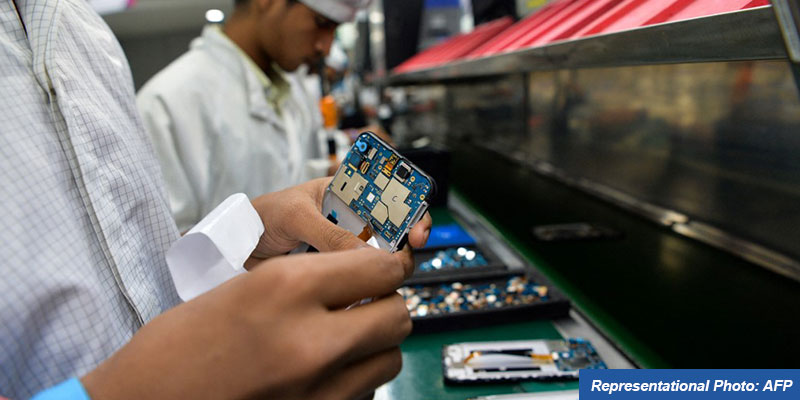
• The Ministry of Electronics and Information Technology (MeitY) notified the Mobile Phone Manufacturing Scheme (MPMS), with a budgetary outlay of Rs 62,500 crore.
What is the significance of MPMS?
• Mobile phone manufacturing has emerged as the anchor of India’s electronics manufacturing ecosystem.
• India is now the world’s second-largest mobile phone manufacturer by volume, with 99.2 per cent of mobile phones used in India being manufactured domestically.
• Smartphones have emerged as the single largest exported product category from India in 2025, surpassing traditional leading export items such as diesel fuel and cut diamonds.
• Mobile phones now constitute a major share of India’s electronics production and exports and are playing a critical role in strengthening India’s position in global value chains.
• The Production Linked Incentive Scheme for Large Scale Electronics Manufacturing has played a transformative role in establishing India as a global hub for mobile manufacturing and exports. The tenure of the PLI scheme ended on March 31, 2026.
• To sustain this growth momentum and further scale up production of mobile phones, the government has notified the new scheme.
Highlights of the scheme:
• The government launched the scheme to further scale up production, deepen domestic value addition, strengthen supply chain resilience and enhance global competitiveness.
• MPMS also aims at building Indian brands to achieve technological sovereignty, capture large economic value and create Indian patents in design and R&D.
• The scheme tenure shall be five years from FY 2026-27 to FY 2030-31.
• The scheme provides incentive support on eligible sales for manufacturing of mobile phones in India at differentiated rates ranging from 2.25 per cent to 5 per cent.
• It also provides additional incentive of up to 1.5 per cent linked to domestic sourcing of key components/sub-assemblies.
• MPMS will also support Indian mobile phone brands to achieve technological sovereignty, capture greater economic value, and encourage Indian patents in design and R&D, while generating employment.
• The scheme will provide a significant impetus to the development of Indian-owned mobile brands, intellectual property and design.
Implementation of the scheme
The MPMS has been divided in two parts:
i) Target segment 1 – Incentivising mobile phone manufacturing.
ii) Target segment 2 – Supporting Indian mobile phone brands.
• In the first segment, the scheme provides a differentiated incentive ranging from 2.25 per cent to 5 per cent.
• Mobile phone companies, including electronics contract manufacturers, with a turnover of Rs 10,000 crore in FY26 will be eligible for MPMS benefits.
• In the second segment, the scheme provides an incentive at 5 per cent for Indian brands and an additional incentive of 3 per cent for Indian design and R&D.
• Mobile phone companies, including electronic manufacturing services (EMS) firms applying in the second segment will need to have 51 per cent Indian ownership, and a turnover of Rs 1,000 crore in FY26 to be eligible for participation in the scheme.
Expected outcomes:
• During the scheme tenure, the cumulative mobile phone production in the country is expected to reach approximately Rs 39 lakh crore with significant increase in exports of mobile phones.
• The scheme is also expected to generate around 60,000 direct jobs thereby contributing to economic growth, employment generation and strengthening India’s position in global electronics manufacturing hub.
(The author is a trainer for Civil Services aspirants.)