The Great Industry Pivot: How Big Tech is Redefining its Future
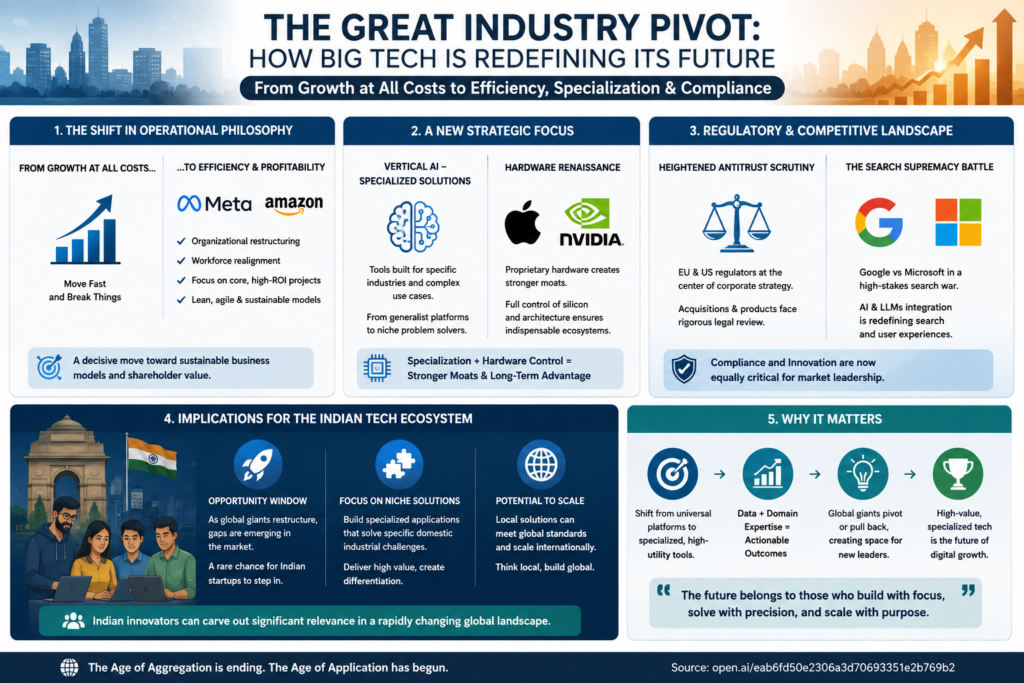
The technology sector, once defined by a decade of rapid expansion and the “move fast and break things” philosophy, has entered a period of profound restructuring. Major global technology firms are currently navigating a significant transition, shifting their focus from unchecked growth toward operational efficiency, specialized technological integration, and stricter compliance with international regulatory frameworks.
This transformation, which came into sharper focus throughout 2023, represents the most substantial change in the corporate technology landscape since the widespread adoption of mobile computing.
The Shift in Operational Philosophy
The most visible change in the industry is the move away from the “growth at all costs” mindset that characterized the previous decade. Prominent companies, including Meta and Amazon, have initiated extensive organizational restructuring and workforce realignments. This “Efficiency Mandate” is designed to prioritize shareholder profitability and create leaner, more agile operational structures.
In practice, this means companies are consolidating their resources, shedding non-core projects, and focusing on projects that offer clear, immediate returns on investment. For the broader market, this signals a move toward sustainable business models rather than long-term speculative growth.
A New Strategic Focus: Vertical Integration
Industry leaders are now pivoting toward the development of “Vertical AI”—specialized tools engineered to address specific industrial problems. Rather than attempting to build “generalist” platforms that cater to every user, firms are investing heavily in customized software capable of executing complex, niche tasks at scale.
This trend is also fueling a “Hardware Renaissance.” As standard software becomes more commoditized, companies like Apple and NVIDIA are increasingly focusing on proprietary hardware. By maintaining full control over the underlying silicon and physical architecture, these firms are building stronger economic moats, ensuring their services remain indispensable to both enterprise and consumer markets.
The Regulatory and Competitive Landscape
The current era is marked by two primary external pressures that are forcing tech giants to rethink their product rollouts and acquisition strategies:
- Heightened Antitrust Scrutiny: Regulatory bodies in the European Union and the United States have moved antitrust considerations from the periphery to the center of corporate strategy. Major acquisitions and product developments are now subject to rigorous legal review, forcing companies to be more cautious about how they scale.
- The Search Supremacy Battle: Microsoft and Google are currently engaged in a high-stakes competition to redefine search. This rivalry is forcing a rapid pivot in traditional business models as these companies integrate Large Language Models into their core services to remain competitive and maintain market share.
Implications for the Indian Tech Ecosystem
The transition from the “Age of Aggregation” to the “Age of Application” presents a unique set of circumstances for India’s technology sector. As Big Tech firms shift their focus toward specialized, actionable industrial solutions, significant gaps are emerging in the market.
Indian startups and mid-market firms are in a position to leverage this disruption. Because the global incumbents are occupied with internal restructuring and regulatory hurdles, there is a rare window of opportunity for smaller players to fill the void. By focusing on niche technological applications—particularly those that solve specific domestic industrial challenges—Indian developers can carve out significant market relevance in a rapidly changing landscape.
Why it Matters
This transition matters for India because it marks a shift away from universal, one-size-fits-all platforms toward specialized, high-utility tools. As global giants pull back or pivot, the focus shifts to companies that can effectively utilize data to create actionable outcomes for specific industries. For the Indian developer community and the burgeoning startup ecosystem, this period of industry flux provides a strategic opening to build high-value, specialized technology that addresses local needs while potentially scaling to meet global standards. Understanding this move from broad aggregation to focused application will be critical for businesses looking to navigate the next decade of digital growth.
Source: [source_domain]